An empty poker table at night with a red thread pinned between two seats
Collusion detection for card rooms and markets

Two players. Two phones. One bankroll.

Device and IP checks catch one person running many accounts. They don't catch two real people on two phones who have agreed not to hurt each other. We look at how the cards were actually played, and we show you the hands.

0.9356
private score on a 370-team poker collusion benchmark, above the winning entry (late submission, see below)
112,540
player pairs ranked in one pass, each with the five hands that justify its score
0
shared devices, IPs or payment methods needed to flag a pair
A player sliding an ace face down into the muck Exhibit 01 / soft play
What slips past

The fold that never shows up in a fraud report.

Soft play, chip dumping and card sharing don't leave a shared fingerprint. They leave a pattern in the decisions: a player who folds top pair to one opponent and nobody else, a stack that drains toward the same seat, a raise that only makes sense if you knew what the other hand was.

Those patterns are invisible in a single hand and obvious across a few hundred. Most security teams find them the slow way, from player complaints. In October a player was reading opponents' hole cards through compromised table tools for about two years before sites acted.

Source: PokerNews, 2 Oct 2026

How it works

We don't ask who is connected. We ask who plays differently together.

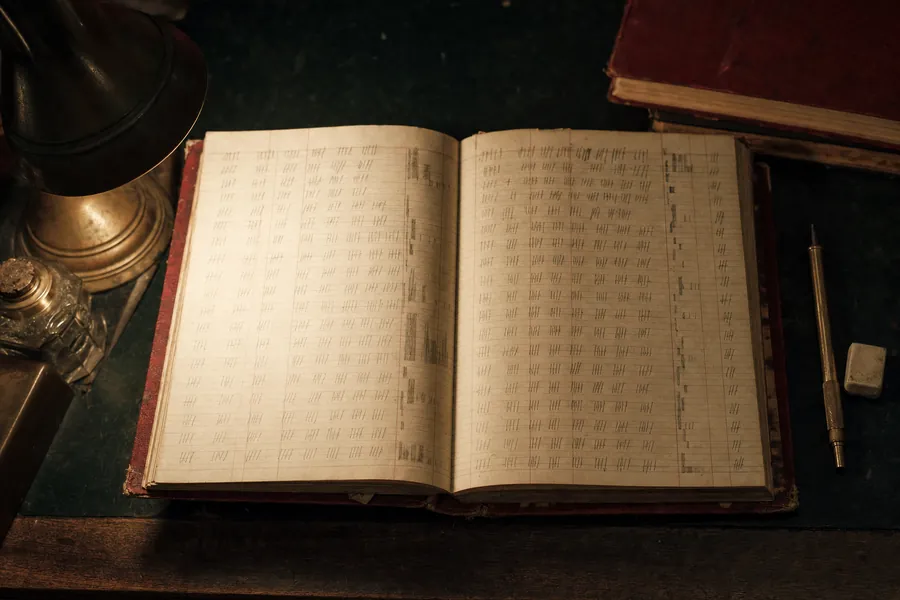
A ledger full of handwritten tally marks
Step A

Model normal play

A model of what a player does in each spot: position, price, stack depth, cards, action so far. It is cross-fitted, so nobody is scored by a model that already saw their tables, and it learns each player's own style so a loose regular doesn't look like a cheat.
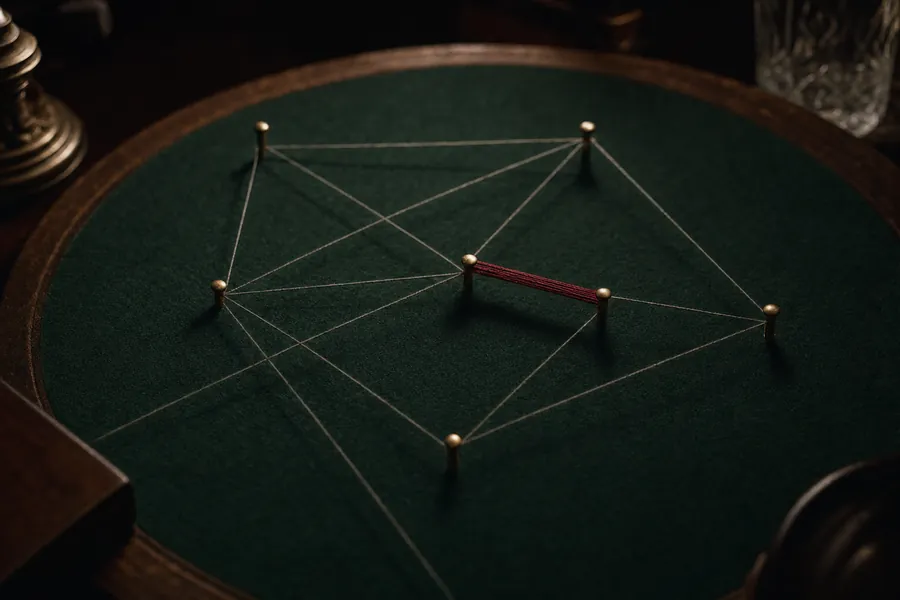
Brass pins on felt with one pair bound by red thread
Step B

Score every pair

For each two players: while B is still in the hand, does A fold, call or raise differently from expectation, and differently from how A plays everyone else? A sequence model then reads every hand the two shared, with each player's strongest other partner as context, so one cheater doesn't drag his innocent tablemates up the list.

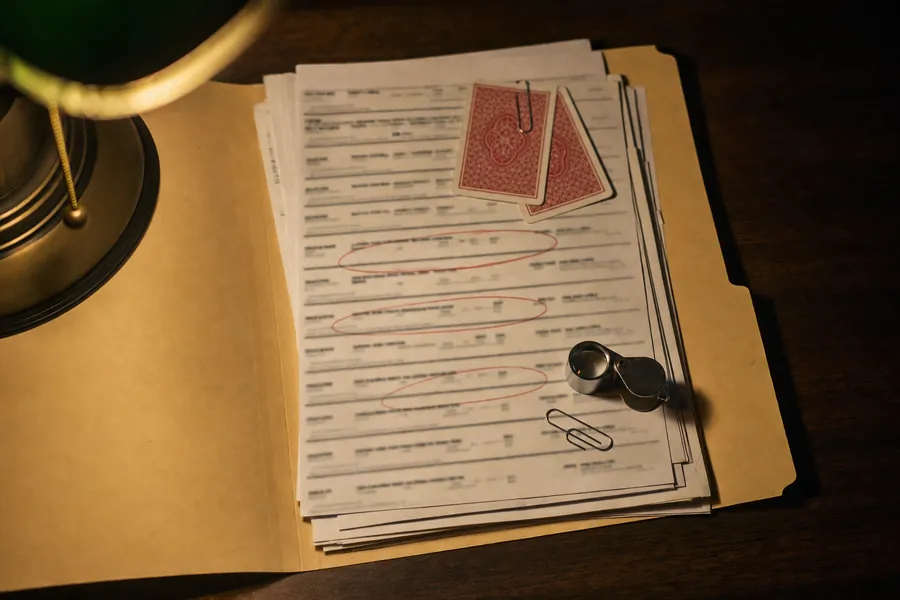
An open case folder with hand histories and circled rows
Step C

Show the hands

Every flagged pair comes with the five hands that carry the signal, in the order a reviewer would read them, and a short case note that includes the innocent explanation. Your team makes the call. We never auto-ban.

Proof

Tested where the answers were hidden.

The "Detect Suspicious Value Transfers in Poker" competition on Kaggle gave 370+ teams two million hands across 400 tables, a handful of labelled colluding pairs, and asked for three things: rank 112,540 pairs, name the type of collusion, and list the hands that prove it.

We finished 5th at the deadline. Afterwards we kept going, and every change was picked on held-out data with its expected score written down before it was ever submitted. The last version scores above the winning entry on the private leaderboard.

What worked and what didn't

Private leaderboard score

Our entry at the deadline (5th)0.92817
Post-deadline v20.93449
Winning entry0.93514
Post-deadline v30.93562
.927 .937 winning entry .93514 deadline v2 v3

Post-deadline scores are late submissions. They don't change the official standings, and we don't claim they do. The competition's own score is 70% pair ranking, 20% evidence hands, 10% behaviour type.

A printed ranked list on a clipboard with the top rows ticked in red Case file
What your team gets

A short list you can actually review.

  • Ranked pairsEvery pair that sat together, scored, so your reviewers start at the top and stop when the budget runs out.
  • Evidence handsThe five hands behind each flag, with what each player held and what they did with it.
  • Case notesA plain-English summary of the pattern and the most likely innocent explanation, written for the person who has to decide.
  • A scorecard against your own casesHow many of the cases you've already closed it would have caught at your review budget, and how often it flags groups of regulars who simply play together a lot.
Trade blotter pages with two rows boxed in red and joined by a line
Same question, different table

Two wallets that keep finding each other.

Wash trading and coordinated volume on prediction markets look a lot like chip dumping: value moving between the same accounts at prices nobody else would take. We're applying the same pair-level method to public on-chain trades and will publish what it finds.

An analyst's desk with printed hand histories and a fanned deck
Pilot

Two weeks on your own hand histories.

  1. You send a few weeks of hands and any cases your security team has already closed. Under NDA, and it can run on your machines if the data can't leave.
  2. We fit it to your games. Stakes, formats, club and private-table setups all change what normal looks like.
  3. You get the list, the hands and the scorecard, plus a straight answer on whether it's worth running every day. Fixed fee, agreed before we start.